“Hello Sonia”: the fake email that nearly diverted a salary
One Monday morning in September, Sonia, our office manager, receives a new bank account number to record before payroll.
Andrew · Founder, project directorOne Monday morning in September, Sonia, our office manager, receives an email from one of our developers. He has changed banks and would like his salary paid into his new account from the end of the month. He gives his new IBAN and asks for a reply by email, because he is in meetings all day. The email is signed with his name, his real job title, software engineer, and his @aam.fr address.
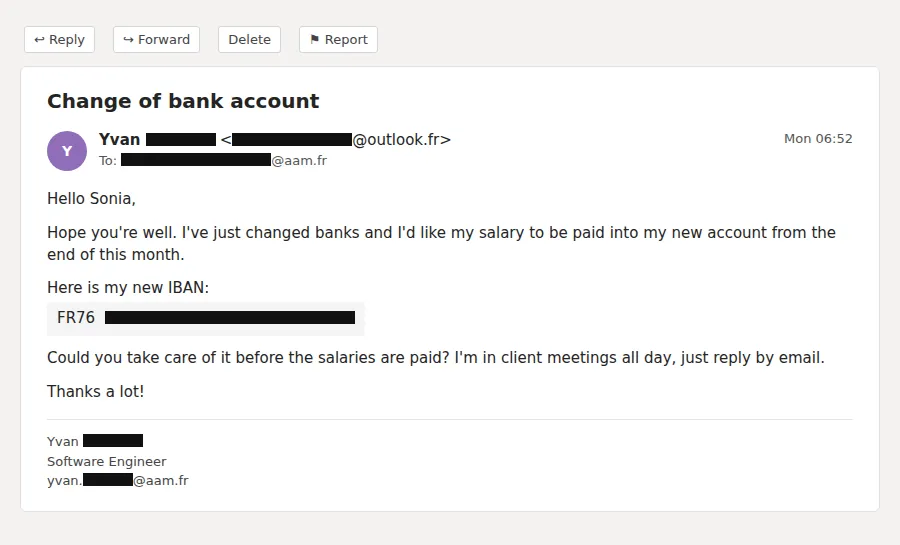
Everything looks right, and payroll goes out in a few days. Sonia opens the payroll software to make the change.
Before saving, she notices the time of the email: 6:52 a.m. This developer is never in that early, and on Teams he has been offline since the day before.
She looks at the sender’s address: it ends in @outlook.fr. Apart from that detail, everything was right: his name, his real position, his signature, the time of the month when payroll is prepared. Someone had taken the time to find out about him and about us.
Sonia saves nothing and calls the developer. He has not changed banks.
A name, a job title and an email address can be found in a few minutes on LinkedIn or on a company’s website, and AI writes the rest without a single mistake. These emails cost almost nothing to produce. The same tools are also used to imitate a voice on the phone, copy a login page or search a website for flaws. Security matters even more than before, for machines as well as for the people who use them.